
Sociology examines how people, groups, and institutions shape society. Students explore issues such as inequality, education, race, gender, health, and social change while developing analytical, research, and communication skills that prepare them to make a meaningful difference in their communities and careers.
Sociology at Lincoln University combines rigorous academics with hands-on learning to help students understand the complex social issues shaping today's world. Through faculty mentorship, undergraduate research, internships, and community engagement, students develop the knowledge and practical skills needed to create positive change in their communities and professions.
Through coursework, research, internships, and experiential learning, you'll develop a deeper understanding of society while strengthening your critical thinking, analytical reasoning, research, communication, and leadership skills. Graduates are prepared for professional careers, graduate study, and leadership across a wide range of fields.
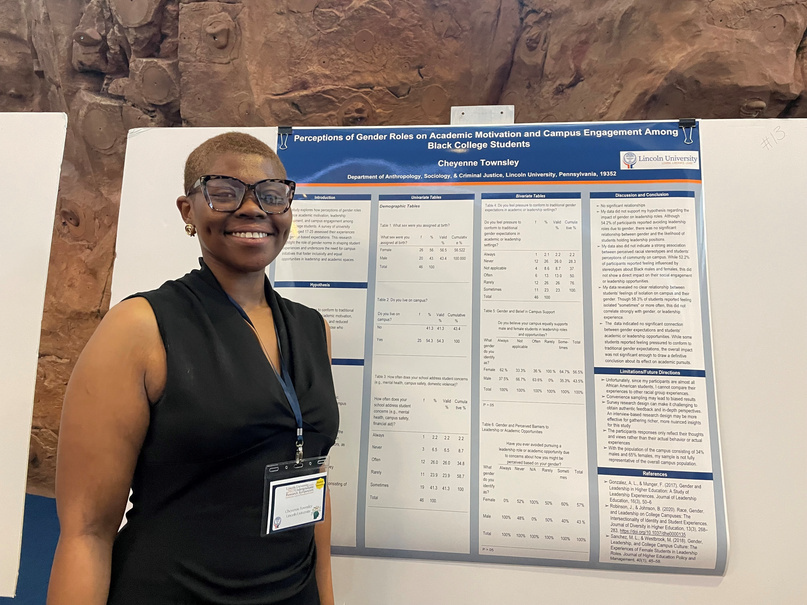
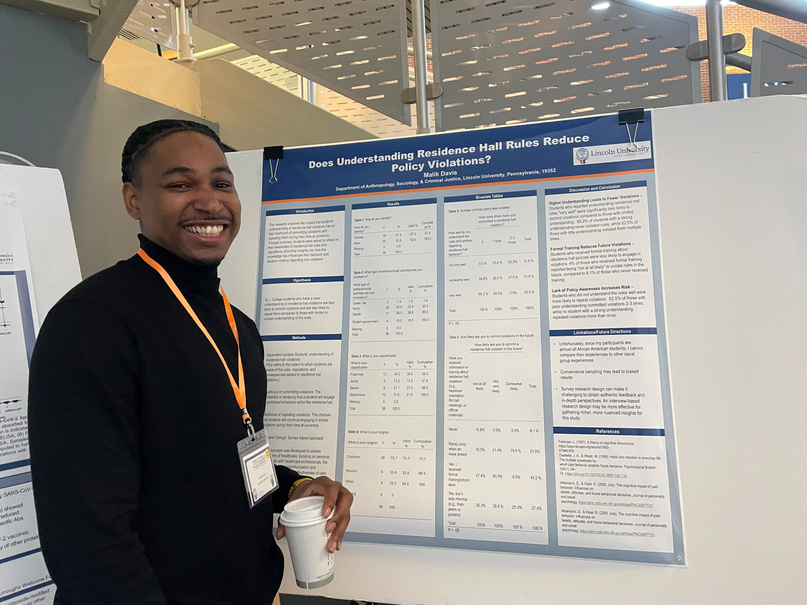
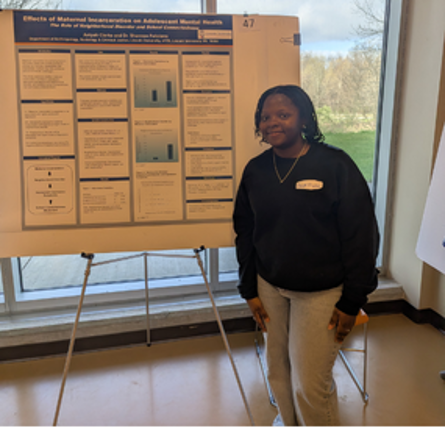
Sociology, Anthropology and Criminal Justice students conduct original research and present their findings at Lincoln University's Undergraduate Research Symposium.
The curriculum explores topics such as race, class, gender, health, families, education, social inequality, urban and rural communities, social movements, deviance, research methods, and social statistics while examining the forces that shape individuals, communities, and institutions.
A Sociology degree prepares graduates for diverse professional careers that require strong analytical, research, communication, and problem-solving skills.
Graduates pursue careers in:
Many graduates also continue their education through graduate or professional school in sociology, law, social work, public health, public administration, education, and related fields.
Sociology graduates are equipped with highly transferable skills that are valued across many professions. Employers seek sociology graduates because they know how to:
Sample Course Sequence for Sociology Major
For more information contact the Anthropology, Sociology and Criminal Justice Department.
